Today we will be doing a definitive comparison of iOS vs Android Apps, based on performance, customization, and more, to prove which one is best for you.
In the current digital era, smartphones have become an indispensable part of our daily lives. Mobile apps play an important role in all areas of communication, entertainment, education, and business. In this context, understanding the differences and advantages and disadvantages between the two major platforms is a very important issue for users.
This comparison is important because each platform has its own features, security measures, performance, and user experience. Some prefer more customization, while others give more importance to stability and security. Therefore, having a clear idea about these issues is essential to make the right decision.
Currently, the mobile app ecosystem is rapidly improving. New apps are being added constantly, advanced technologies are being used, and new features are being added according to the needs of users. Developers are also now paying special attention to creating more advanced and user-friendly apps.
In terms of popularity, the Android platform is the most widely used worldwide because it is easily available on devices of different price ranges and allows users more customization. On the other hand, another platform is known for its advanced security, premium experience, and reliable performance. Therefore, both platforms are currently advancing equally in the global market according to user needs and preferences.
What Are IOS and Android Apps?
What Are iOS Apps?
In the iOS vs Android Apps discussion, iOS apps are apps developed for the iOS operating system, which is used on Apple Inc. devices. They generally provide a secure, fast, and premium user experience to their users.
What Are Android Apps?
Android apps are applications designed for the Android operating system, which runs on the Google-managed platform. They are available on a variety of devices, are easy to use, and offer a wide range of customization options, giving users more freedom and a more diverse experience.
A Brief Overview Of The Key Differences Between The Two Platforms
The main differences between the two platforms mainly depend on the type of system, security, customization, and device diversity. iOS is a closed ecosystem, which provides more secure, fast, and stable performance, where updates reach all devices at the same time. On the other hand, Android is open-source, so users can use it on devices of different brands and customize it easily. It also provides more freedom in terms of app installation, file management, and user control, which is considered a big advantage for many users.
Device and Operating System Relationship
The relationship between the device and the operating system serves as the foundation of a smartphone’s performance. How fast, secure, and user-friendly a device is depends largely on its operating system.
iOS is usually used on certain devices, which can create an excellent combination of hardware and software. As a result, users get smooth and reliable performance.
On the other hand, Android is used on devices from different companies, so its diversity is much greater. iOS vs Android Apps In this context, it can be understood that while one platform is limited to specific devices, the other is easily available on devices of different prices and features.
As a result, users can choose according to their needs and budget. In addition, the issues of operating system updates, security, and the addition of new features also make this relationship more important.
IOS vs Android Apps: Key Differences Overview
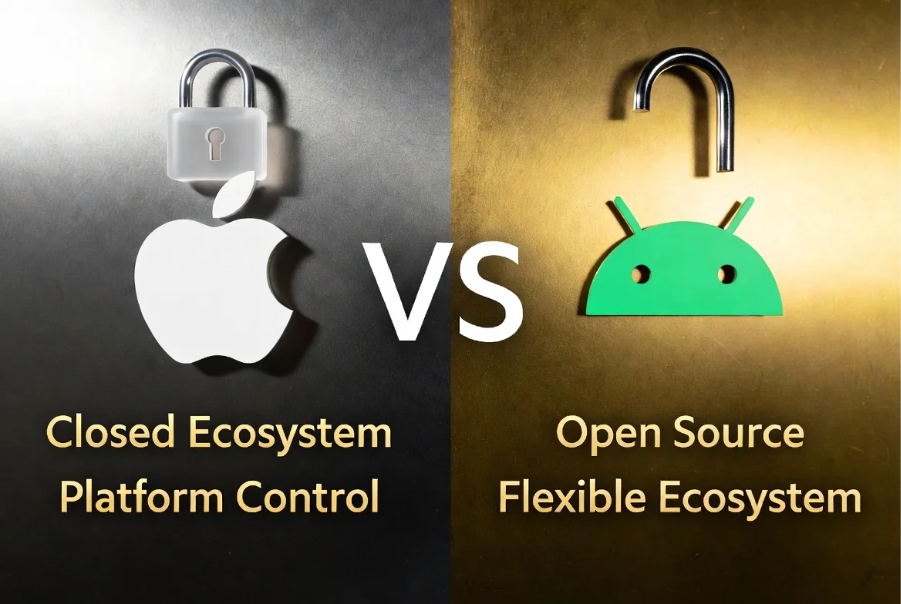
The differences between the two platforms mainly depend on performance, security, customization, and user experience. iOS generally operates as a closed ecosystem, where hardware and software are tightly integrated. This results in stability, faster updates, and improved security on devices.
On the other hand, Android is an open-source platform, so different manufacturers use it to create a variety of devices, which gives users more options and customization. The app ecosystem, update types, and device diversity—all of these aspects combine to provide a different experience for the two platforms, which helps users make decisions based on their needs and preferences.
Platform Control
In the case of iOS vs Android Apps, platform control is an important factor that determines how controlled or open a platform is. iOS is a closed ecosystem, where there is strict control over app distribution, updates, and development. This makes it easier to maintain the quality and security of the app, but also places restrictions on developers. On the other hand, Android is an open platform, where users and developers have relatively more freedom. Here, there is less control, but much more flexibility, as there is more scope for app installation, customization, and system changes.
Open Source vs Closed Ecosystem
- The concept of open source vs closed ecosystem makes a distinction based on the control, transparency, and user freedom of the platform. This issue plays an important role in the context of iOS vs Android Apps.
- In open source platforms, developers can access the source code, which allows for more customization and innovation.
- In closed ecosystems, the source code is limited, which increases security and control but reduces flexibility.
- In open systems, it can be used on different devices and brands, which increases device diversity.
- In closed systems, there is close coordination between specific hardware and software, resulting in stable performance.
- According to the user’s needs, someone chooses open source if they want more freedom, while someone chooses closed ecosystems if they want security and reliability.
App Distribution system (App Store vs Google Play)
App Store (iOS)
The iOS app distribution system is primarily managed through the App Store. Here, each app goes through a rigorous review process before being published, to ensure security, performance, and adherence to guidelines. This controlled environment ensures that users get relatively safe and quality apps. Although the rules are somewhat strict for developers, it is known as a premium and stable platform, where app updates and distribution are managed following specific rules.
Google Play (Android)
Android’s app distribution system is managed through the Google Play Store. Publishing apps here is relatively easy and fast, allowing developers to get their apps to users with fewer barriers. Although security is checked, it is still a relatively open platform, allowing for a wide variety of apps to be easily found. This system provides users with greater diversity, free app opportunities, and faster updates, which plays a significant role in increasing its popularity.
Development Environment
In the case of iOS vs Android Apps, the development environment is an important factor for developers, which determines the process, tools, and technologies used to build apps. iOS app development is typically done using Xcode and Swift, which are limited to a specific hardware and software ecosystem. This makes testing and optimization relatively easy. On the other hand, Android development uses Android Studio, Java, or Kotlin, where apps have to be optimized for different devices and screen sizes. This different environment affects the type of work and challenges faced by developers.
Development Process Comparison
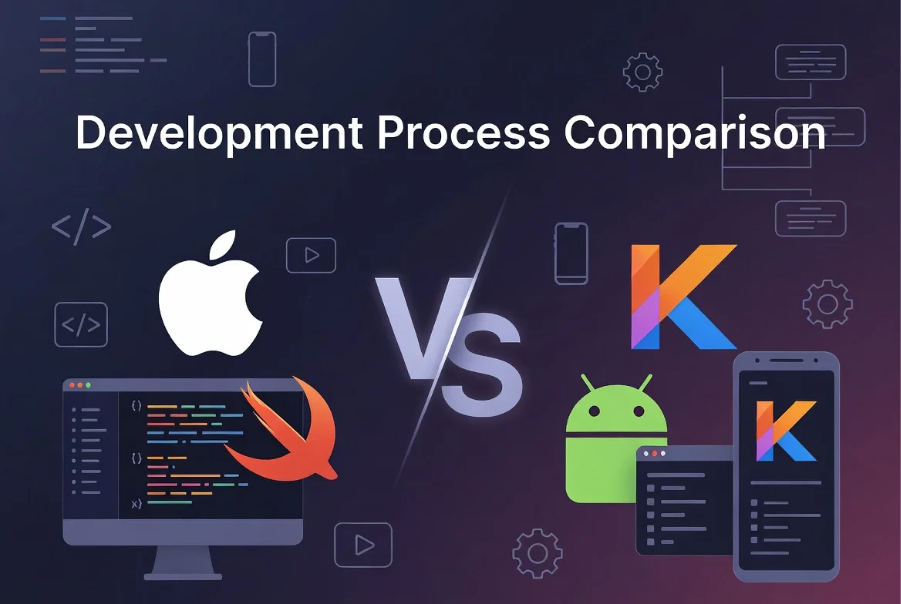
In mobile app development, the tools, languages, and workflows used on different platforms differ, which affects the entire development process. For developers, choosing the right tools and languages plays a crucial role in determining the performance, scalability, and user experience of the app. These differences are clearly visible in the comparison of iOS vs Android Apps. iOS development is usually done using Swift language and Xcode IDE, where specific guidelines have to be followed.
On the other hand, Android development uses Kotlin or Java and Android Studio, which are relatively more flexible. While iOS is relatively simple in terms of coding complexity, Android is more complex due to different devices and screen sizes. There are also differences in the testing and deployment process, where iOS has strict reviews before app release, while Android can publish apps quickly and easily.
Key Points:
- iOS app development: Developed in Xcode using Swift, which works in a specific ecosystem and provides a stable environment.
- Android app development: Developed in Android Studio using Kotlin or Java, where it has to be optimized for different devices.
- Coding complexity: iOS is relatively less complex, but Android is more complex due to device variations and screen sizes.
- Testing & deployment: iOS takes longer due to a strict review process, while Android allows for faster deployment and testing is relatively easy.
User Experience (UX) & Interface (UI)
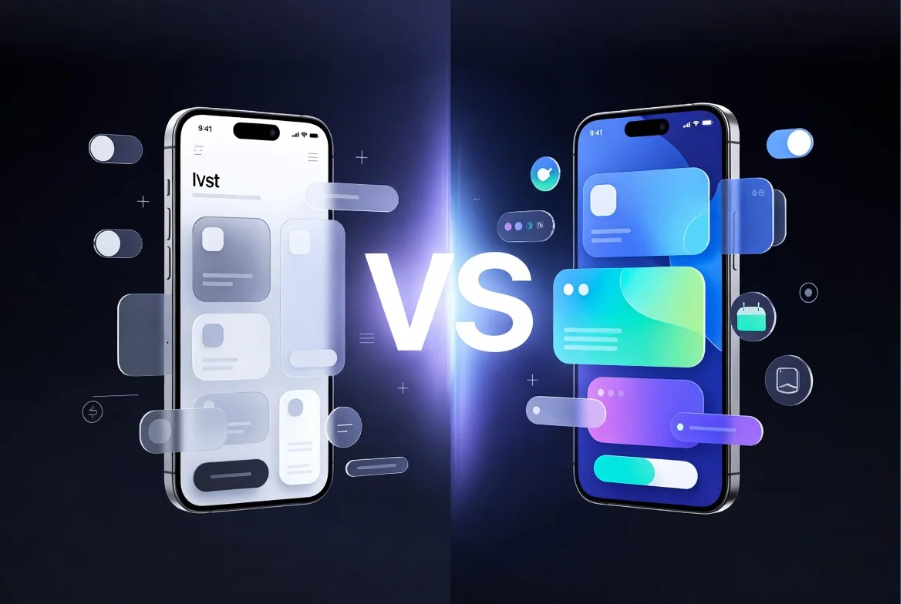
In the case of iOS vs Android Apps, user experience and interface design play an important role, which affects user satisfaction and ease of use of the app. iOS generally maintains UI consistency, where the same design pattern is followed in every app, so users can easily get used to new apps.
On the other hand, Android is more flexible in terms of UI customization, where developers and users can change the interface as they wish. In terms of user friendliness, iOS offers a relatively simple and minimal design, while Android offers more features and customization options.
In terms of design guidelines, iOS follows the Human Interface Guidelines, while Android uses Material Design to ensure a modern and interactive experience.
Key Points:
- iOS UI consistency: The same layout and design are maintained across all apps.
- Android UI customization: Users and developers can easily change the interface.
- User friendliness: iOS is simple and straightforward, Android is feature-rich and flexible.
- Design guidelines: iOS follows the Human Interface Guidelines, Android uses Material Design.
Performance & Optimization
Performance & Optimization depends on the speed, stability, and resource efficiency of a mobile app. iOS is generally built with a combination of specific hardware and software, so apps run fast and smoothly, and optimization is relatively easy. On the other hand, Android is a bit more challenging for developers to optimize performance because it runs on a variety of devices and hardware configurations. However, with proper coding, memory management, and resource optimization, it is possible to ensure high-quality performance on both platforms.
Security & Privacy
When it comes to iOS vs Android Apps, security and privacy are important considerations, which determine the security of user data and the reliability of the app. iOS is generally a closed ecosystem, so there are strict controls on app installation and data access, so the risk of malware and unauthorized access is relatively low. On the other hand, Android is an open platform, allowing users to install apps from various sources, which, while providing flexibility, can pose some security risks. However, both platforms try to keep user data safe through regular updates, encryption, and permission controls.
IOS Security Advantages
The security benefits of iOS are mainly due to its closed ecosystem and strict control system. Here, app installation and distribution are only through specific sources, which reduces the risk of malware entry. Each app goes through a rigorous review process before being published on the App Store, ensuring security and quality. In addition, data encryption, sandboxing, and regular system updates help keep user information safe. Due to all these features, the iOS platform provides a safe and reliable environment for users.
Android Vulnerabilities
Compared to iOS vs Android Apps, the Android platform may have some security risks or vulnerabilities, which is due to its open ecosystem. Since Android is used by different devices and manufacturers, system updates do not reach all devices at the same time, as a result, some devices may run on outdated security patches. In addition, the risk of malware or harmful software entering the system increases due to the opportunity to install apps from third-party app stores or unknown sources. However, Google tries to reduce this risk through regular security updates, Play Protect, and permission controls, so that users can have a relatively safe experience.
App Permissions System
| Subject | iOS | Android |
| Permission Control | You must explicitly ask for permission when downloading and using the app | Permissions are required both when running and installing the app |
| User Control | Users can easily turn specific permissions on or off. | Users can manage permissions in a granular manner |
| Permission Prompts | Clearly shown | More detailed and step-by-step prompts can be seen |
| Background Access | is strictly controlled | More flexible in some cases |
| Privacy Focus | High privacy and high default restrictions | More customization, but privacy is limited to user settings |
This chart shows that iOS is generally more restrictive and privacy-focused, while Android offers a more flexible and user-controlled permissions system.
Data protection approaches
In the case of iOS vs Android Apps, the data protection method plays an important role in protecting user data. iOS usually keeps data safe by default with strong encryption, sandboxing, and limited app access, thus reducing the risk of unauthorized access.
On the other hand, Android ensures data protection through various security layers, permission controls, and Google Play Protect. However, being an open platform, a lot depends on the user’s awareness and settings configuration. Both platforms improve data security through regular updates and security patches and try to protect user personal information.
Cost of Development
The cost of mobile app development depends on various factors such as platform, features, design, development time, and team skills. iOS apps are usually built using specific devices and tools, making development and testing relatively easy, but the cost can be a bit higher due to device and developer resources. On the other hand, Android app development requires optimization for different devices and screen sizes, which can increase the time and effort. In addition, the complexity of the app, backend integration, and maintenance costs also affect the total development budget.
IOS App Development Cost
When comparing iOS vs Android Apps, various factors become important in determining iOS app development cost. iOS app development is usually limited to a specific hardware and software ecosystem, making testing and optimization easier, but the cost can be a bit higher as developers require high-quality skills and tools. The total cost varies according to the design, feature complexity, third-party integrations, and scale of the app. In addition, app store review, update, and maintenance costs also need to be considered in the long run, which affects the total budget for creating a successful iOS app.
Android App Development Cost
The cost of Android app development depends on various factors, such as the app’s features, design complexity, development time, and team experience. The Android platform requires apps to be optimized for different devices, screen sizes, and hardware configurations, which increases development and testing time. As a result, the cost can be relatively high in some cases. However, being an open platform, development tools and resources are readily available, which helps reduce costs in some cases. In addition, app maintenance, updates, and third-party integrations also have a significant impact on the total budget.
Maintenance Cost Comparison
In the case of iOS vs Android Apps, maintenance costs vary by platform and have a significant impact on the long-term operation of the app. iOS apps are usually updated for specific devices and system versions, making testing and bug fixing relatively easy and the maintenance process streamlined. On the other hand, Android apps have to be optimized separately for different devices, screen sizes, and OS versions, making maintenance somewhat more complex and time-consuming. As a result, the cost of updates and support can be a bit higher for Android apps, but it is relatively low and controlled for iOS.
Which is More Budget-Friendly and Why
Android is generally considered more budget-friendly, as it is open-source, so development tools and resources are readily available, and it is relatively easy to publish apps on different devices. Despite the diversity of devices, it is possible to initially build and test apps at a lower cost. On the other hand, iOS app development is somewhat more expensive because it requires specific devices, advanced hardware, and in some cases, highly skilled developers. In addition, iOS’s closed ecosystem and standard review process ensure the quality of the app, but also affect the budget.
Target Audience Differences
In the case of iOS vs Android Apps, the target audience or user type varies from platform to platform. iOS is generally more popular among premium device users, high-income earners, and those who value stability and security. These users generally prioritize the quality of the app, design, and user experience. On the other hand, Android, being readily available on devices of various price ranges, reaches a wide and diverse user group, including a large number of budget-friendly device users. As a result, Android’s audience is relatively large and diverse, whereas iOS targets a specific and premium segment.
Pros and Cons of IOS Apps
Pros of iOS Apps
The main advantages of iOS apps are its high security, stable performance, and improved user experience. Being a closed ecosystem, apps go through a rigorous review process, which reduces the risk of malware or harmful apps. In addition, due to the close integration of hardware and software, apps run smoothly and receive updates quickly. Users can easily get used to new apps due to UI consistency on iOS devices. It is considered a reliable platform for premium users, which is particularly strong in terms of quality and security.
Cons of iOS Apps
When comparing iOS vs Android Apps, iOS apps also have some limitations, such as less customization options and relatively less user freedom due to the closed system. There are specific rules to follow for app installation and development, which can be a bit difficult for developers. In addition, iOS devices are generally not accessible to all users due to their high price. Market reach may be less in some cases due to device and platform limitations. As a result, although it is secure and stable, there are still some limitations in terms of flexibility and accessibility.
Which One Should You Choose?
iOS and Android—The choice between the two depends entirely on the user’s needs, budget, and preferences. If you prioritize security, stable performance, and a premium user experience, iOS might be a good choice. On the other hand, if you want more customization, device diversity, and relatively affordable options, Android is the right choice for you. For business needs, development goals and target audience also play an important role.
Future Trends of IOS vs Android Apps
In the future, the mobile app ecosystem will move towards more advanced technologies. The use of artificial intelligence, automation, and personalized features in apps will increase, which will make the user experience smarter and more interactive. In addition, cloud-based services, cross-platform development, and advanced security systems will make app development easier and more effective. In the future, apps will be faster, more reliable, and have the ability to work automatically according to the user’s needs, which will take the entire mobile industry to a new level.
Conclusion
Analyzing the comparison of iOS vs Android Apps, it is understood that both platforms have their own strengths, limitations, and are designed to meet different user needs. Since iOS is basically a closed ecosystem, it is ahead in terms of security, stability, and premium user experience. Due to the combination of specific hardware and software, the performance is also quite smooth, which is attractive to many users. On the other hand, since Android is open-source, it offers more advantages in terms of customization, device diversity, and accessibility. Users of different budgets can easily use Android devices, which has increased its popularity.
Development, app distribution, UI/UX, security, and maintenance—these two platforms have their own differences in each area. One platform provides a controlled and secure environment, while the other emphasizes freedom and flexibility. So which platform is better depends on the user’s needs, budget, and purpose of use.
Overall, no platform is best for everyone; rather, making the right choice based on personal needs and priorities is the most important.